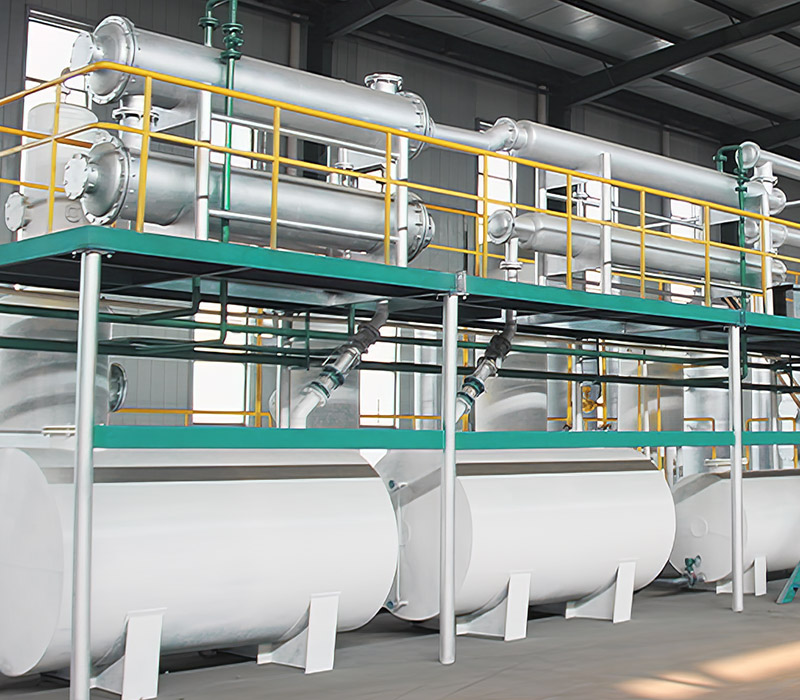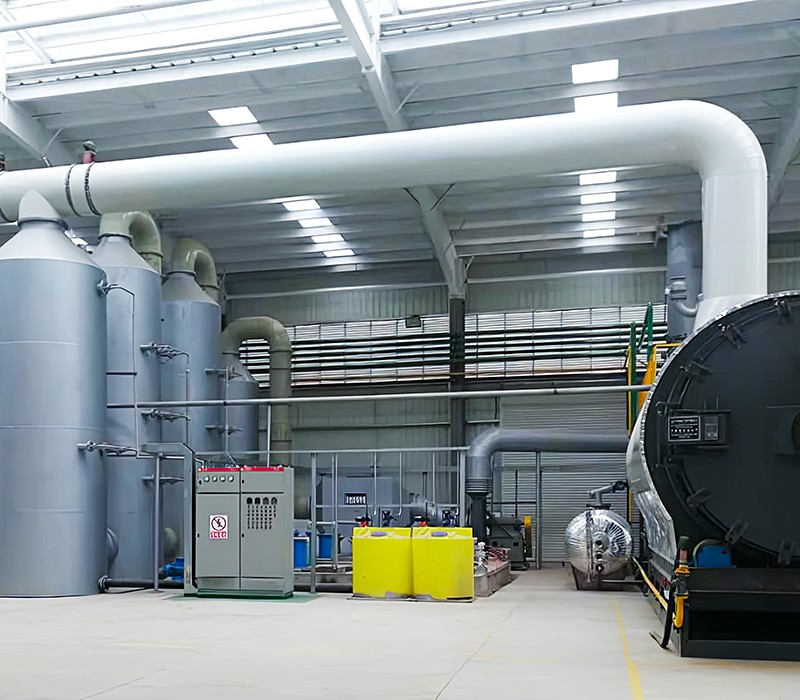
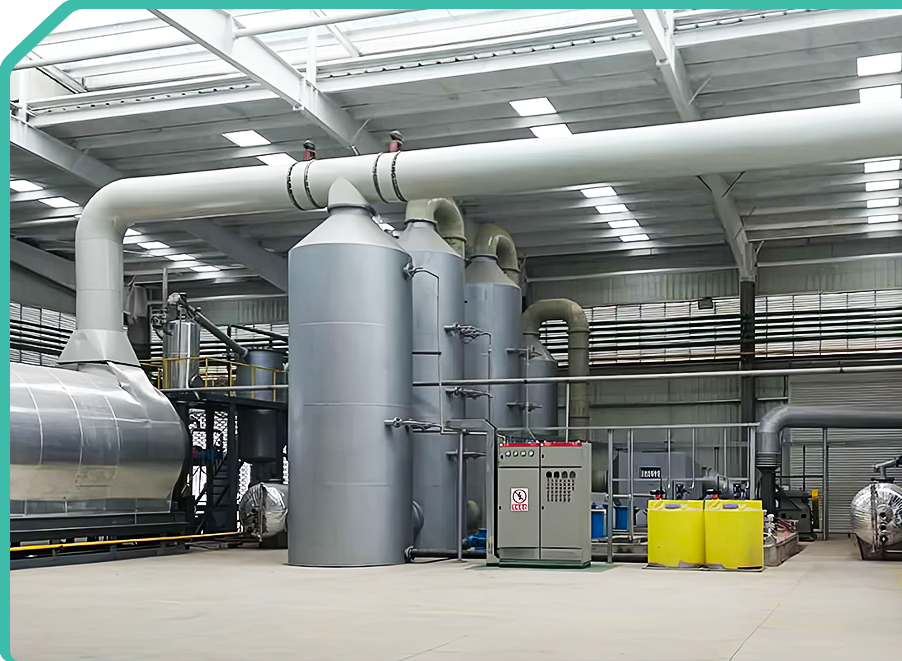
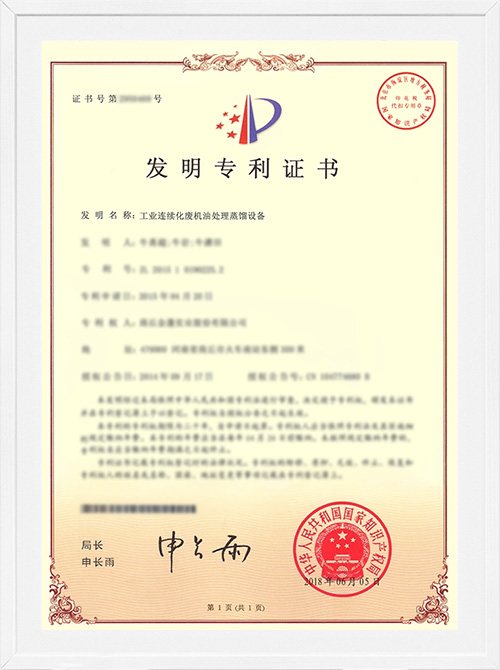
Este sistema procesa eficientemente diversos aceites residuales (incluidas las fracciones térmicamente sensibles) a través de etapas atmosféricas y de vacío integradas. A diferencia de las unidades atmosféricas estándar, logra un 98% de recuperación de combustible con un consumo de energía 20% menor a través del fraccionamiento asistido por vacío. Cuenta con un diseño modular compacto para escala de capacidad flexible (10-50T/día), modulación de presión automatizada y sistemas de seguridad a prueba de explosión. Las etapas de condensación personalizables producen salida de grado diesel (95% de pureza) mientras manejan entradas de viscosidad variable. Certificado por CE con una huella 30% menor que las plantas atmosféricas convencionales. La etapa de presión atmosférica se usa para realizar la separación primaria de los componentes de la luz, y la etapa de vacío se usa para realizar un fraccionamiento profundo eficiente de componentes pesados al reducir el punto de ebullición, reteniendo efectivamente los componentes sensibles al calor, evitando el agrietamiento térmico y la carbonización, y asegurando la calidad del aceite estable. La torre negativa de fraccionamiento asistida por presión y el sistema de condensación de varias etapas mejoran la eficiencia de destilación y minimizan la tasa de residuos, lo que hace que la tasa de recuperación de combustible sea mucho más alta que el equipo tradicional. El sistema de vacío reduce la temperatura de funcionamiento general y reduce el consumo de energía de calentamiento; Con la unidad automática de control de temperatura y presión y recuperación de calor, toda la máquina tiene un menor consumo de energía operativa.
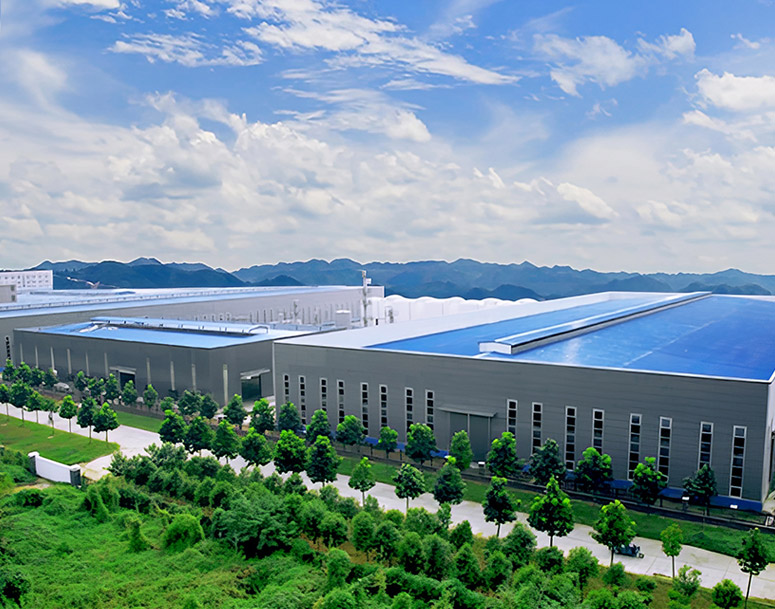

La empresa fue fundada
How Vacuum Pressure Distillation Enhances Oil Quality and Reduces Thermal Cracking
Atmospheric and vacuum pressure distillation equipment has become a cornerstone in modern waste oil processing, providing industries with solutions that maximize fuel recovery while preserving oil quality. Unlike traditional atmospheric-only systems, these advanced units employ a combination of atmospheric separation and vacuum-assisted fractionation, allowing for precise control over temperature and pressure conditions during distillation. This dual-stage approach ensures that heat-sensitive oil fractions are processed without undergoing thermal cracking or carbonization, preserving the integrity and value of the final product.
The atmospheric stage in these systems is responsible for the initial separation of light components, such as low-boiling hydrocarbons. Once these fractions are removed, the vacuum pressure stage takes over, performing deep fractionation of heavier components at significantly reduced temperatures. By lowering the boiling point, vacuum-assisted distillation minimizes thermal stress on sensitive compounds, preventing degradation and ensuring stable oil quality. This careful temperature management is crucial for producing diesel-grade fuel with high purity, often reaching 95% or higher, while maintaining consistent viscosity even when processing variable feedstocks.
Energy efficiency is another major advantage of atmospheric and vacuum pressure distillation equipment. Vacuum systems allow for lower operating temperatures, which in turn reduces heating energy requirements. Modern units often integrate automatic temperature and pressure control, combined with heat recovery mechanisms, further lowering power consumption and improving overall operational efficiency. Compared to conventional atmospheric plants, these systems can achieve up to 98% fuel recovery while consuming roughly 20% less energy, representing a significant advantage for both industrial profitability and environmental sustainability.
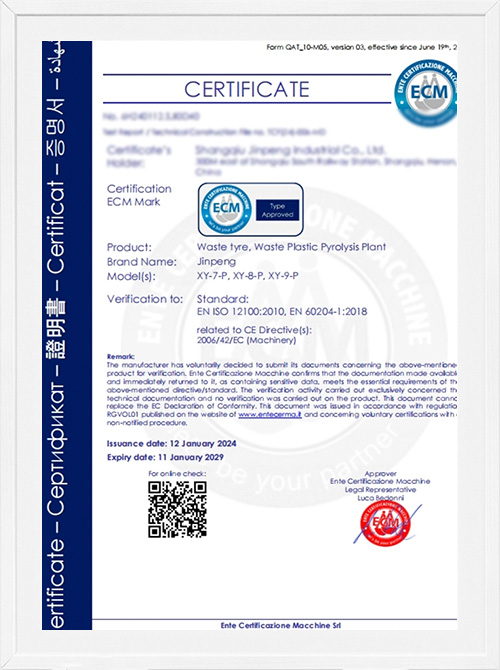
Compact, modular designs have also transformed the usability of these distillation units. Equipment capacities can range from 10 to 50 tons per day, making it easier for operators to scale operations based on production requirements. Multi-stage condensation systems ensure efficient recovery of all valuable fractions, minimizing residue and reducing waste. Negative pressure-assisted fractionation towers contribute to higher separation efficiency, providing a safer and more stable operating environment. Many of these systems are CE-certified and feature explosion-proof safety mechanisms, demonstrating a strong commitment to industrial safety and regulatory compliance.
Companies like Pyrojin ECO Industrial Co., Ltd., based in Shangqiu, China, have been at the forefront of developing these innovative waste oil processing solutions. With over a decade of experience in environmental protection systems, Pyrojin leverages research and development to deliver equipment that supports global circular economy goals. Each system is engineered not only to recover high-purity fuel efficiently but also to minimize energy use, reduce environmental impact, and provide operators with flexible, scalable solutions for a wide range of waste oil inputs.
In summary, atmospheric and vacuum pressure distillation equipment offers a superior approach to oil recovery by combining precise temperature control, vacuum-assisted fractionation, and advanced condensation technology. These systems prevent thermal cracking, protect heat-sensitive components, and deliver high-purity diesel-grade fuel, all while lowering energy consumption and reducing operational costs. As industries continue to prioritize efficiency and sustainability, vacuum pressure distillation remains a key technology in achieving these goals.


Vamos a pirólisis!


 +44 7529 150720
  [email protected]
  A 300 metros al este de la estación de tren del Sur, en la ciudad de Shangqiu, provincia de Henan.
  Fabricante de equipos para el aprovechamiento de residuos

 Calculadora de ganancias
 English
 русский
 Français
 Español
 عربى
عربى